Do robot mowers help lawn health?
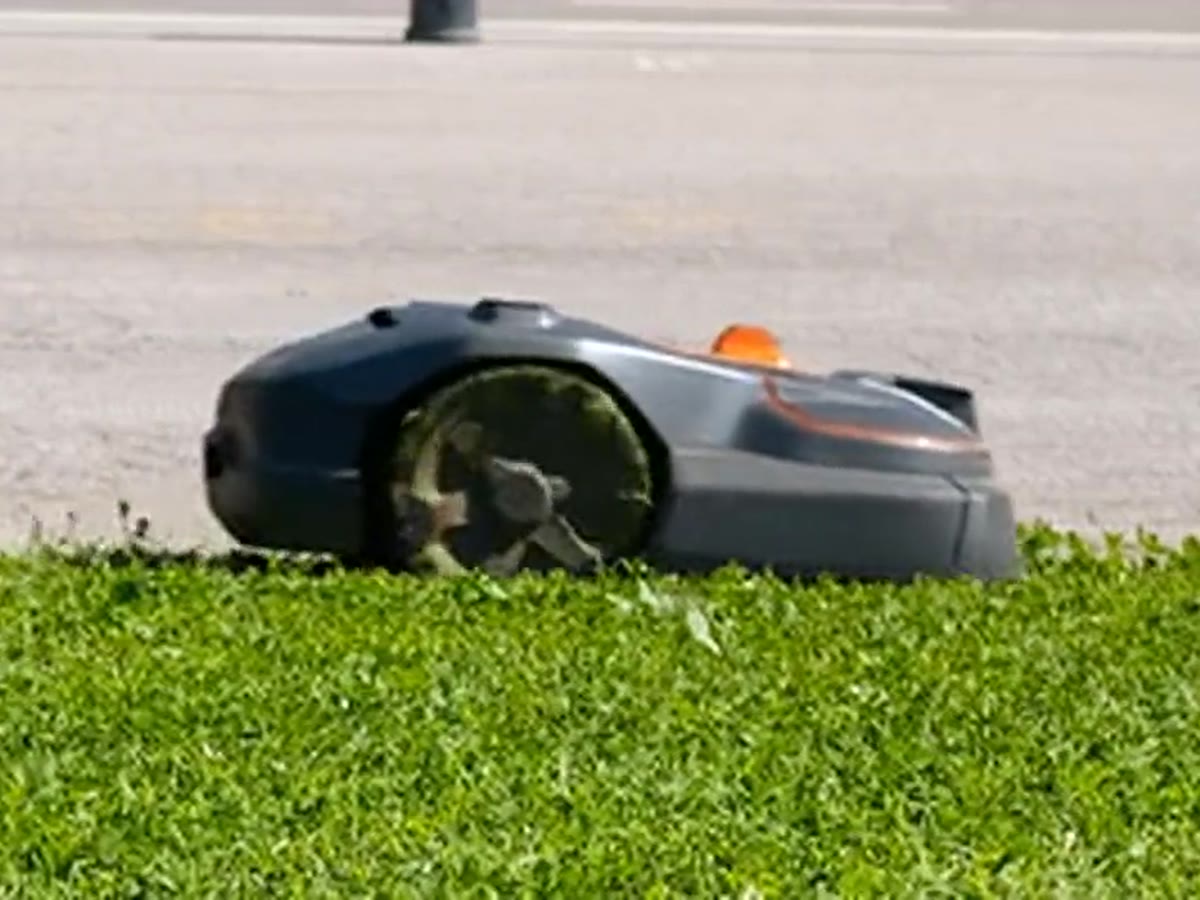
They can. A robot mower cuts a little leaf every day or two instead of a lot once a week. In a University of Pisa trial on tall fescue, the robot-mown lawn was denser, scored higher for quality and had less weed cover than a lawn cut with a petrol rotary mower at the same height. Its clippings stay on the lawn and feed the soil. A robot only handles the cutting, though: soil, water and roots still need their own care.
What changes when the mower never really stops?
What matters is how much leaf comes off compared with how much has grown. A weekly mow can be just right: Oregon State University Extension recommends mowing about once a week in the growing season and taking no more than a third of the leaf at a time (OSU Extension). The trouble starts when the grass has grown fast since the last cut and one pass takes a large share of the leaf at once. A robot avoids that by design: it runs most days and takes only the tip each time, so the lawn keeps an even amount of leaf all week.
That steady leaf matters below ground. Leaf is where the grass makes its energy, and some of that energy goes to the roots and the soil life around them. In our reading, a cut that never strips the lawn back hard keeps that supply steadier. This is the same principle we follow with any mowing: mow to the growth, not the calendar. A robot simply makes “little and often” the default.

What does the research actually show?
The best-known study comes from the University of Pisa. Grossi and colleagues compared a robot mower with a petrol walk-behind rotary mower on tall fescue, both set to 3.5 cm (HortTechnology, 2016). The lawn was sown in September 2014 and mown the usual way until April 2015; the two mowers were then compared for 12 weeks, from 21 April to 14 July 2015. The robot-mown turf was denser, with narrower leaves, and scored 7.3 for quality against 6.4. Weed cover was 6% against 9%. Disease was no different between the two. Two cautions from the paper itself: the comparison ran for only 12 weeks, on sandy soil, and the authors say the gain may come from cutting every day as much as from the robot. They call for trials on warm-season grasses such as couch and kikuyu.
On weeds, the picture is mixed. Danish golf trials found more white clover under robot mowing in one study (ROBO-GOLF, 2022), and no drop in broadleaf weeds on mixed fairways in another (International Turfgrass Society Research Journal, 2025). So treat weed control as a possible bonus, not a promise. A weed that is already established usually needs its own answer; read why mowing off a weed only prunes it.
Most of this research is on European cool-season grasses and golf turf. We found no published trial of robot mowers on Melbourne home lawns, so read these results as a guide, not a forecast for your lawn.
Do the clippings feed the soil or cause thatch?
They feed it. Fine clippings fall between the blades and break down quickly. Oregon State University Extension says returned clippings act like a slow-release fertiliser, and its turf researcher reports that returning them with a mulching mower can cut the fertiliser rate almost in half (OSU Extension). Penn State Extension also finds clippings are not the main cause of thatch (Penn State Extension).
A robot’s clippings are tiny, so they are among the easiest to return. That is one less bag of green waste and one more small feed for the soil life, every day. It also means the lawn’s feeding plan should be read again once a robot takes over, rather than carried on unchanged; more fertiliser is not always the answer, and we explain why.
Is a robot mower better for the environment?
In one trial, it used less energy to run. In the Pisa comparison, the robot used an estimated 4.8 kWh of primary energy a week against 12.6 kWh for the petrol walk-behind mower it was tested against, measured on that trial’s lawn in June and July 2015 (HortTechnology, 2016). That is running energy under those conditions, not a full environmental comparison: it doesn’t count making the robot or its battery, and an electric push mower wasn’t tested. An electric robot also has no exhaust at the lawn and runs quietly.
Wildlife is the other side. Oxford University tests on 18 robot models found none could detect small juvenile hedgehogs before touching them; the work was co-funded by a mower maker (University of Oxford). Australia has no hedgehogs, but small animals still use our lawns at night. The simple step is to schedule the robot for daylight hours only and walk the lawn before it starts after a long break.
What can’t a robot mower do?
It can’t fix the soil. Compacted clay, poor drainage and low soil life sit under the leaf, where the blades never reach. On a clay site, the clay under your lawn can shape how the grass grows more than how it is cut.
It still needs parking on wet clay. A robot is light, but daily passes over saturated clay can still leave tracks and press the soil down. Manufacturers advise waiting after heavy rain before mowing on clay (eufy Australia). Set a rain pause and give the lawn a break in a wet Melbourne winter.
It needs the right height and the right lawn. Each robot has a cutting range. A buffalo lawn in shade or a couch lawn kept very short may sit outside it. Newly laid turf also needs time to root before a robot drives on it.
It doesn’t edge. Edges, paths and the strip along a fence still need a person.
It needs looking after. Blades, cleaning, software updates and a yearly service are part of owning one; read what robot mower care involves.
How do you set up a robot mower for a healthier lawn?
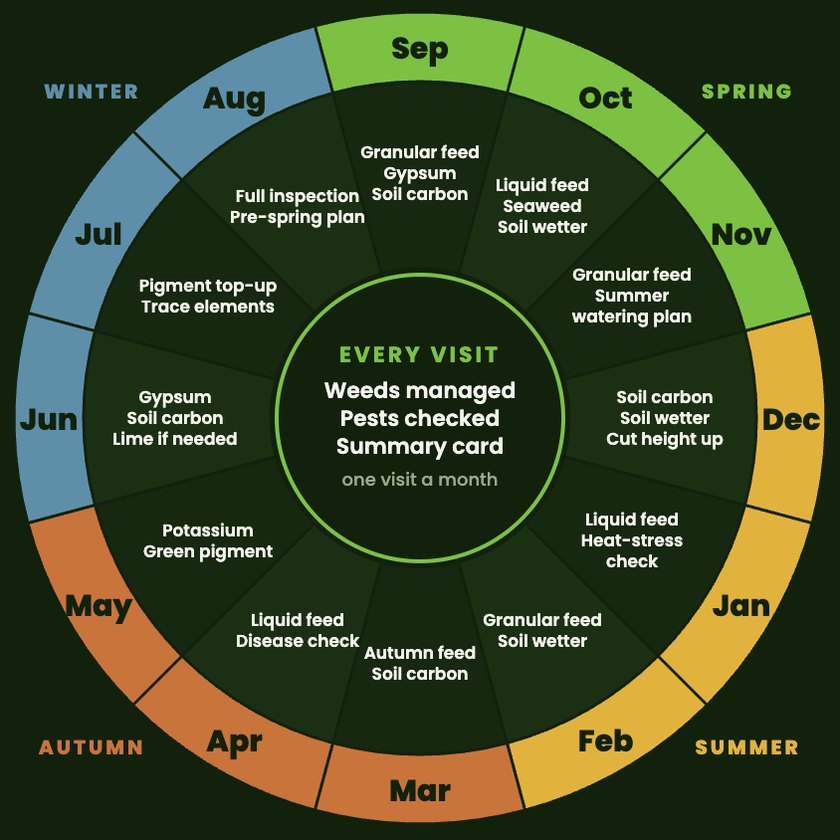
Set the height for your grass and the season, not the lowest setting. Run it in daylight. Pause it after heavy rain, and park it while a feed or treatment is drying or being watered in. Leave the clippings where they fall. Then watch what happens over a month: is the colour even, are the weak spots changing, are wheel tracks appearing anywhere?
If the lawn keeps a pale patch, a soggy corner or a thinning strip under trees, the robot is telling you something about the site. Those patterns need a closer look at the living soil underneath.
Local lawn care and the next step
For local service information, see lawn care in Bayside. Whoever or whatever does the cutting, the soil still needs its own reading. If you’d like a robot without the setup and upkeep, Infinity Lawns Premium is the Program plus a robot we install and look after.
See Program plans and prices, or learn how the Program works before deciding whether it fits your lawn.
Common questions
Should I collect the clippings from a robot mower?
No. Robot clippings are fine and break down quickly, returning nutrients to the soil. Research finds clippings are not the main cause of thatch.
Will a robot mower get rid of weeds?
Not reliably. One trial found less weed cover under robot mowing; others found no change, or more clover. An established weed still needs its own answer.
Can a robot mower run in the rain?
Many can, but it isn’t good for clay soil. Daily passes on saturated clay can leave tracks and compact the soil. Pause it after heavy rain.
Does Greenshift offer robot mowing?
Yes, on Infinity Lawns Premium. We recommend a robot for your lawn, our supplier sells it to you, and we install it and look after it at every monthly visit. On the standard Infinity Lawns Program, routine mowing stays with you or your mower. Compare Program and Premium.
Want to understand what your lawn needs? Learn how the Infinity Lawns Program starts with a Lawn Performance Assessment.
How the Program worksCustodianship in practice: we facilitate rather than impose, listening as much as we tend, and working with the rhythms of the living soil rather than against them.
Greenshift Infinity Lawns acknowledges the Wurundjeri Woi-wurrung and Bunurong / Boon Wurrung peoples of the Kulin Nation, the Traditional Owners and Custodians of the lands and waters of Melbourne's inner south-east on which we work. We pay our respects to Elders past and present, and recognise their continuing connection to this land, its waters, and its skies.