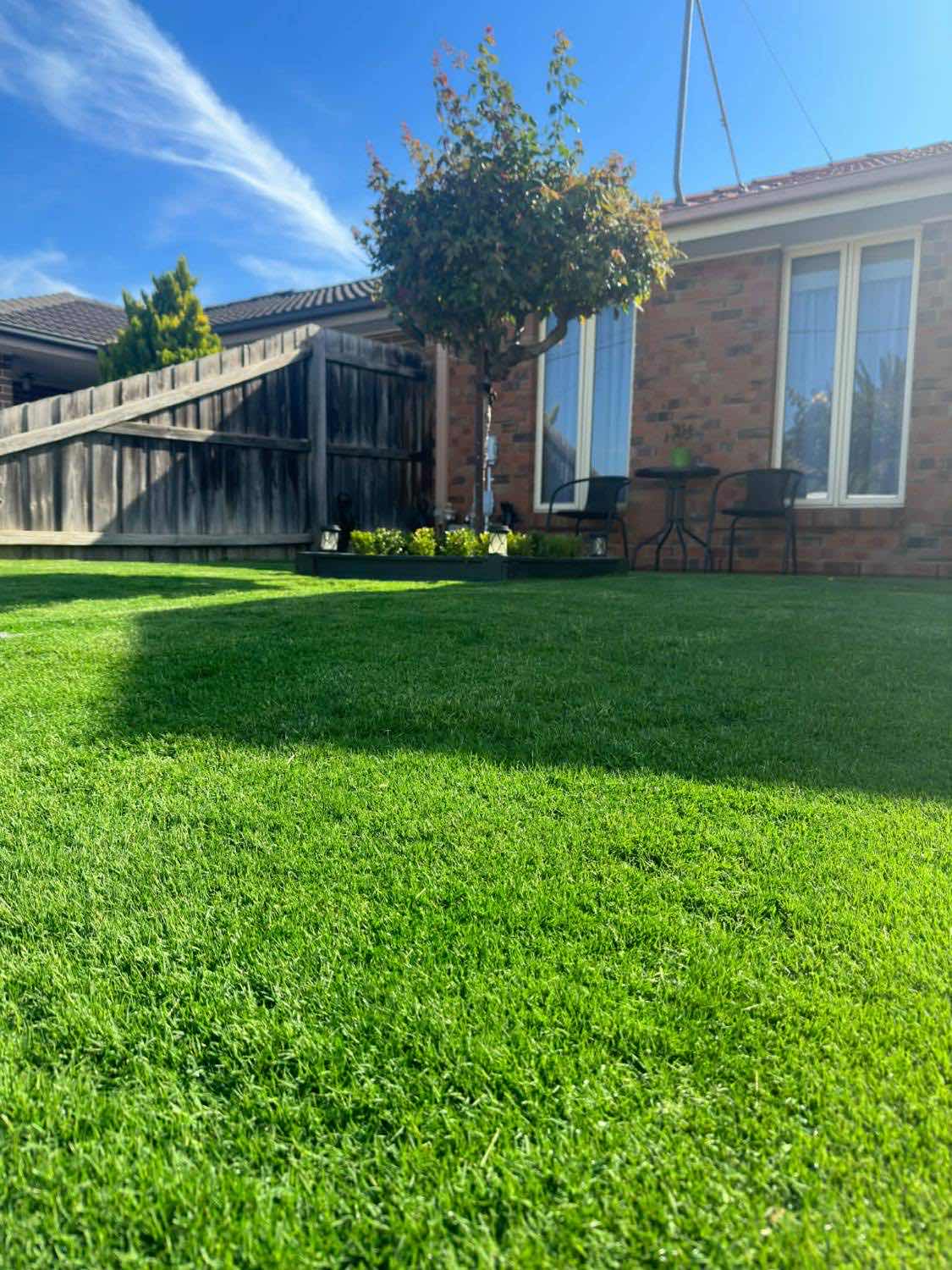
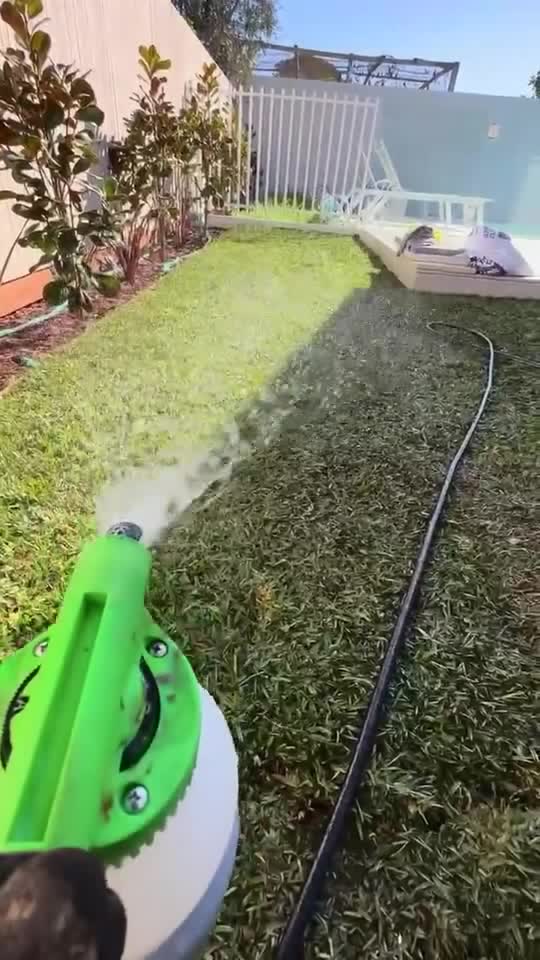
There is more life in a handful of healthy soil than there are people on Earth. A lawn is only the part of it we can see.
Why does lawn fertiliser stop working?
It's a pattern we see on lawns across Stonnington, Boroondara, Bayside and Glen Eira. A bag of lawn food goes down in spring and the grass greens up for two or three weeks. Then it fades, so another bag goes down, and the gap between "green" and "tired" gets shorter every year. Weeds keep finding the thin spots. Water pools after rain. The lawn seems to need more and more just to stay where it is.
Some fading is normal. A quick-release feed is used up fast: Cornell University's turf guide says water-soluble nitrogen typically lasts about two to six weeks. But when the green spell keeps getting shorter and each bag buys less, something is holding the lawn back. Often it's the soil underneath not doing its share of the work. It can also be watering, shade, mowing too short, compaction or pH. Colour alone can't tell them apart, so we test and look before we treat.
What lives in healthy lawn soil?
Healthy soil is not dirt. It's a working community: bacteria, fungi, protozoa, nematodes, earthworms and the roots themselves, all trading with each other. Scientists call it the soil food web. You can think of it as the lawn's digestive system.
- Roots leak sugars into the soil, and that feeds the microbes living right around them.
- Bacteria and fungi break down dead roots and leaf litter, and turn nutrients that are locked up in the soil into a form roots can use.
- Fungal threads reach beyond the roots, carrying water and phosphorus back to the grass.
- Earthworms and soil life glue clay particles into crumbs, creating the pores that let air and water in.
When that system is working, the lawn is fed slowly and steadily from below. When it's starved, compacted or repeatedly knocked back, the grass comes to depend on whatever is put on top.
Agriculture Victoria's guide to how soil works lists the same jobs: soil organisms break down organic matter, release nutrients for plants and bind soil into crumbs that improve drainage and air, and earthworm channels let air and water move down.

Why does the usual approach wear lawn soil down?
A big dose of quick-release fertiliser mostly pushes top growth. The leaf greens up fast, but the flush comes at the expense of the roots, and on its own it does little to rebuild the soil community. Add years of mowing too short, foot traffic on wet clay and light, frequent watering, and the roots stay near the surface and the soil life thins out. The structure goes with it. That's when Melbourne clay sets hard, sheds water, and leaves the lawn living in the top few centimetres.
How do you feed the soil instead of the grass?
1. Diagnose first
A soil test shows pH and structure. Soil life struggles when pH is out of range, so correcting it, only where the test says so, can do more than another bag of fertiliser.
2. Put carbon back
Soil life runs on carbon, and most of it comes from the grass itself, through its roots. Humic soil carbon and humates add to that and help the soil hold on to water and nutrients, and seaweed and fulvic acid in liquid feeds can help the roots grow.
3. Feed little and often
A balanced feed timed to the season, rather than one big hit, keeps the lawn growing steadily without the flush-and-crash cycle.
4. Give it air
Coring and aerating in spring or autumn, while the grass can recover, opens compacted clay so oxygen, water and roots can move down again. On the Infinity Lawns Program, coring is quoted separately and never added without your written agreement.
5. Stop knocking it back
Weeds managed every visit. A higher cut, so the roots go deeper: we don't mow, but we'll give you or your mower the right cut height for your grass. Nothing put down that the lawn doesn't need.
How long until soil-first care shows results?
Soil life can respond within weeks, but soil structure changes over seasons. In the first few months, the early signs to look for are water soaking in faster and colour holding longer between feeds. Over the first year, look for deeper roots, a lawn that copes better with the heat, and less bare ground for weeds. We check root depth against the baseline from your first visit, and the summary card after every visit shows the rest. The aim is a lawn that does more of the work itself, so it needs less from you.
Common questions
Why does my lawn fertiliser stop working?
A quick-release feed pushes fast top growth and is used up within weeks, so some fading is expected. If the green spell keeps getting shorter, something is holding the lawn back: the soil may not be doing its share of the work, or the cause may be watering, shade, mowing too short, compaction or pH. Colour alone can't tell you which. A soil test and a look at the site can.
What is soil-first lawn care?
Lawn care that looks after the soil so the lawn is fed slowly and steadily from below. It means testing pH and structure first, putting carbon back, feeding little and often, opening up compacted clay, and putting nothing down that the lawn doesn't need.
How long does it take to improve lawn soil?
Soil life can respond within weeks, but soil structure changes over seasons. In the first few months, look for water soaking in faster and colour holding longer between feeds. Over the first year, look for deeper roots, a lawn that copes better with the heat, and less bare ground for weeds.
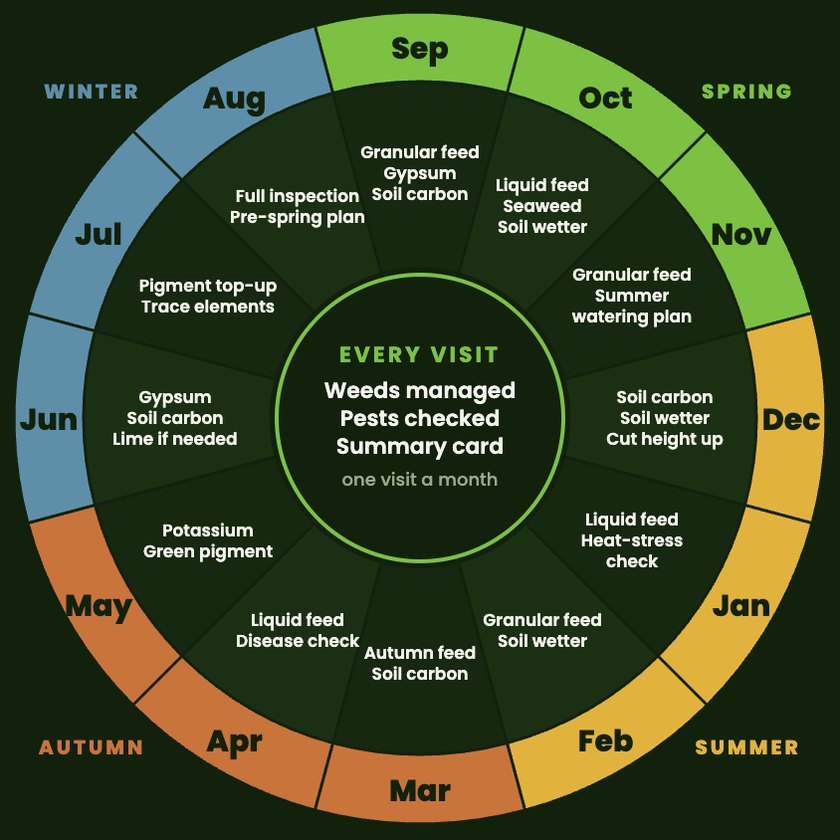
Ready for a lawn that's fed from the ground up? Your first visit is your Lawn Performance Assessment, included in your price: we test the soil and send your written report and 12-month program within about 48 hours.
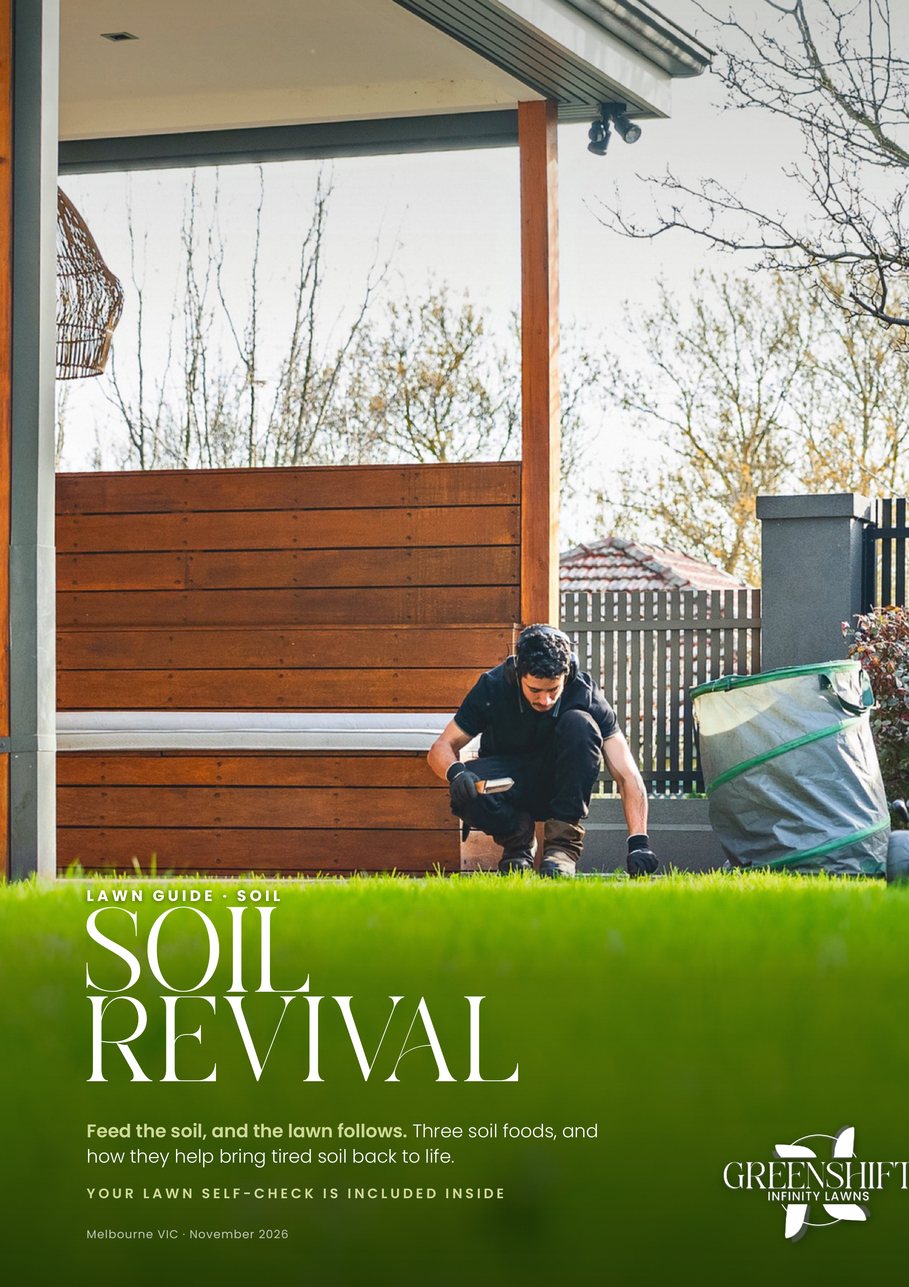
See plans and pricesRather start on your own? Soil Revival shows three soil foods, with a lawn self-check inside.
The regenerative lawn care specialist as custodian: we facilitate rather than impose, listening as much as we tend, and working with the rhythms of the living soil rather than against them.
Greenshift Infinity Lawns acknowledges the Wurundjeri Woi-wurrung and Bunurong / Boon Wurrung peoples of the Kulin Nation, the Traditional Owners and Custodians of the lands and waters of Melbourne's inner south-east on which we work. We pay our respects to Elders past and present, and recognise their continuing connection to this land, its waters, and its skies.