Why does a lawn look brown or patchy after mowing?
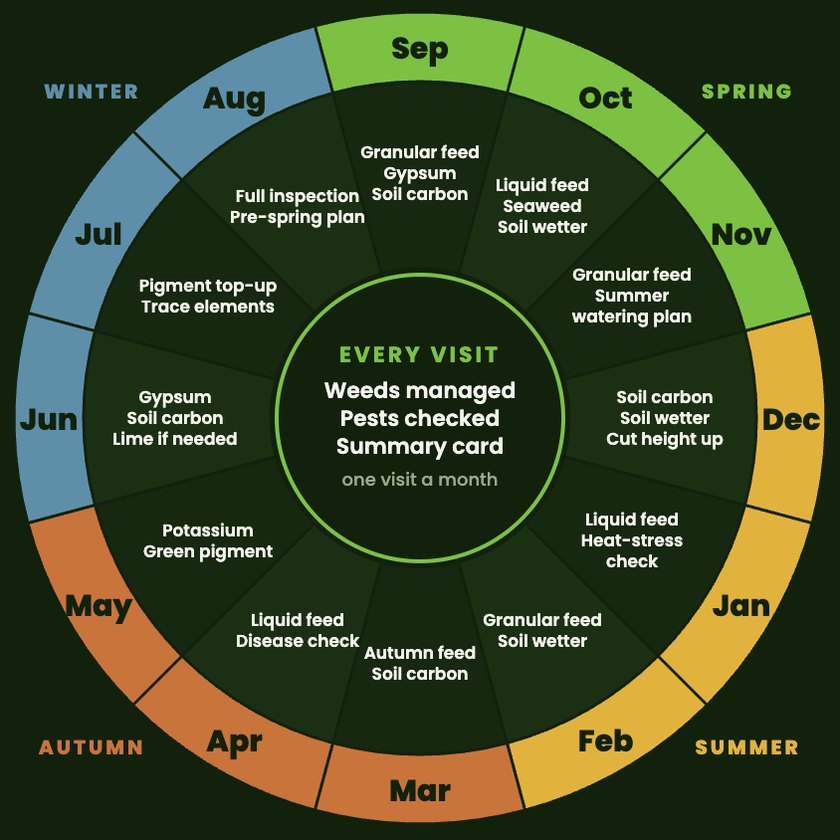
A lawn can look worse after mowing because of the cut, uneven ground, stress or an existing weak patch. Check leaf tips, actual cut height and where the damage occurs before blaming the mower or adding a treatment. A recurring pattern needs its site history as well.
It looked better before the cut
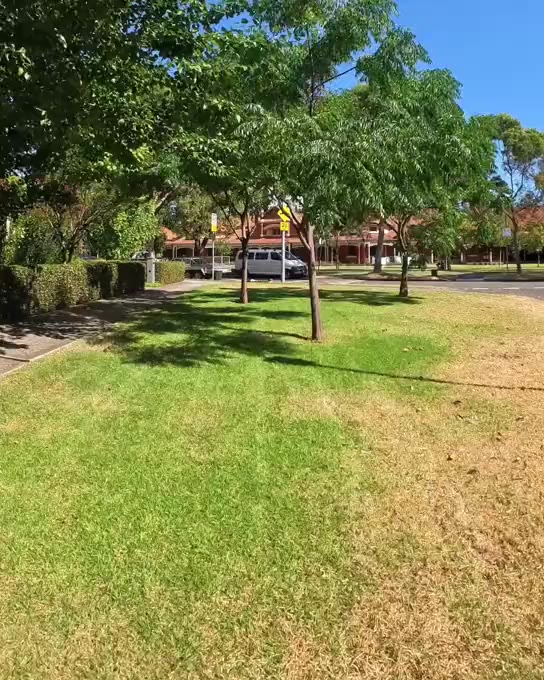
The mower has just finished, and a pale strip is visible across the lawn. A raised section looks brown. Beneath the tree, the turf appears thinner than it did yesterday. It is natural to connect the change with the machine that has just passed over it.
Sometimes that connection is right. A poor cut or an unsuitable height can damage grass. Sometimes the cut makes an existing weakness easier to see. The useful response is to inspect the evidence before blaming the equipment, the person mowing or the soil.
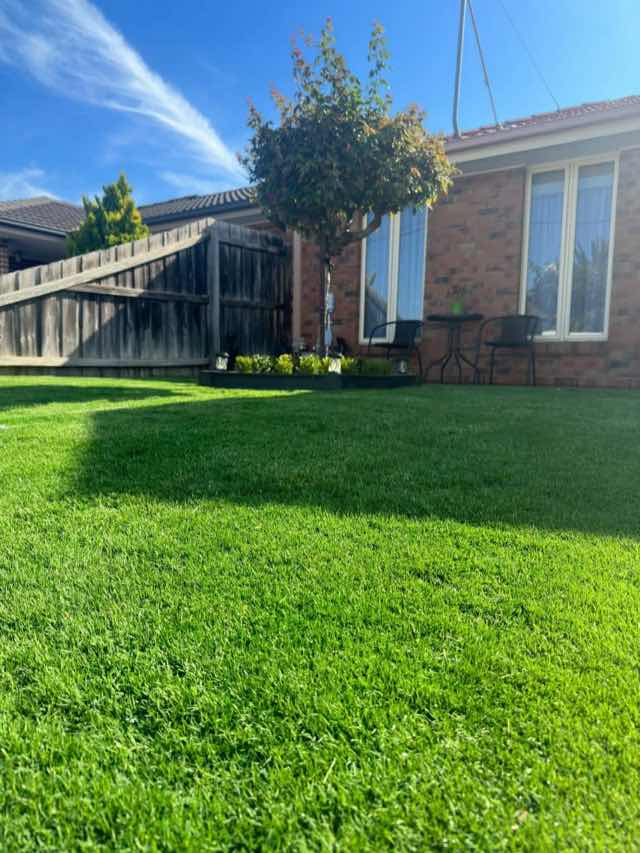
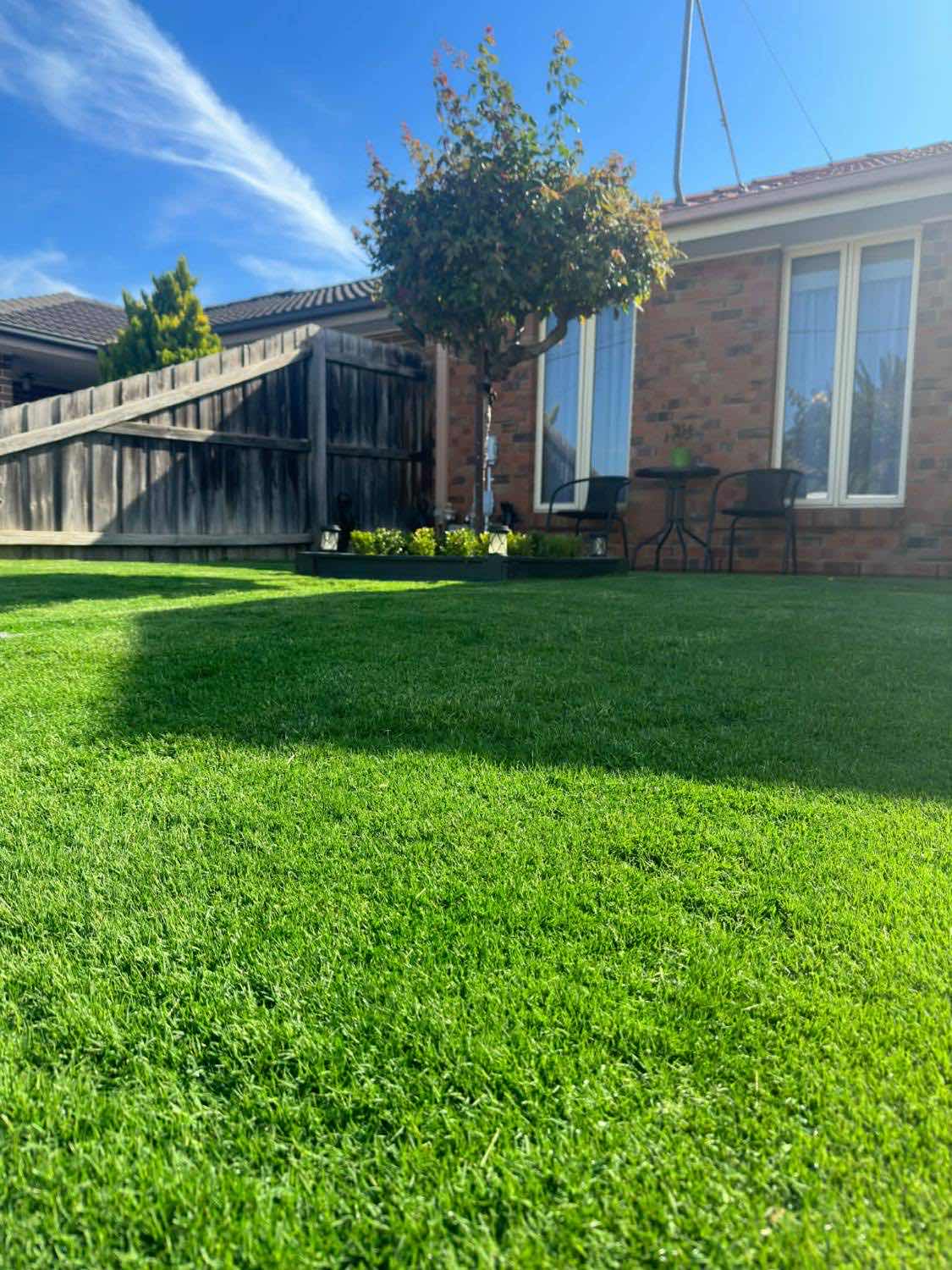
For a lawn in Melbourne’s inner south-east, the answer may differ within a few metres. A sunny centre, a shaded boundary and a worn route to the washing line are different growing environments, even when one mower cuts them all.
How do you check whether the mower is contributing?
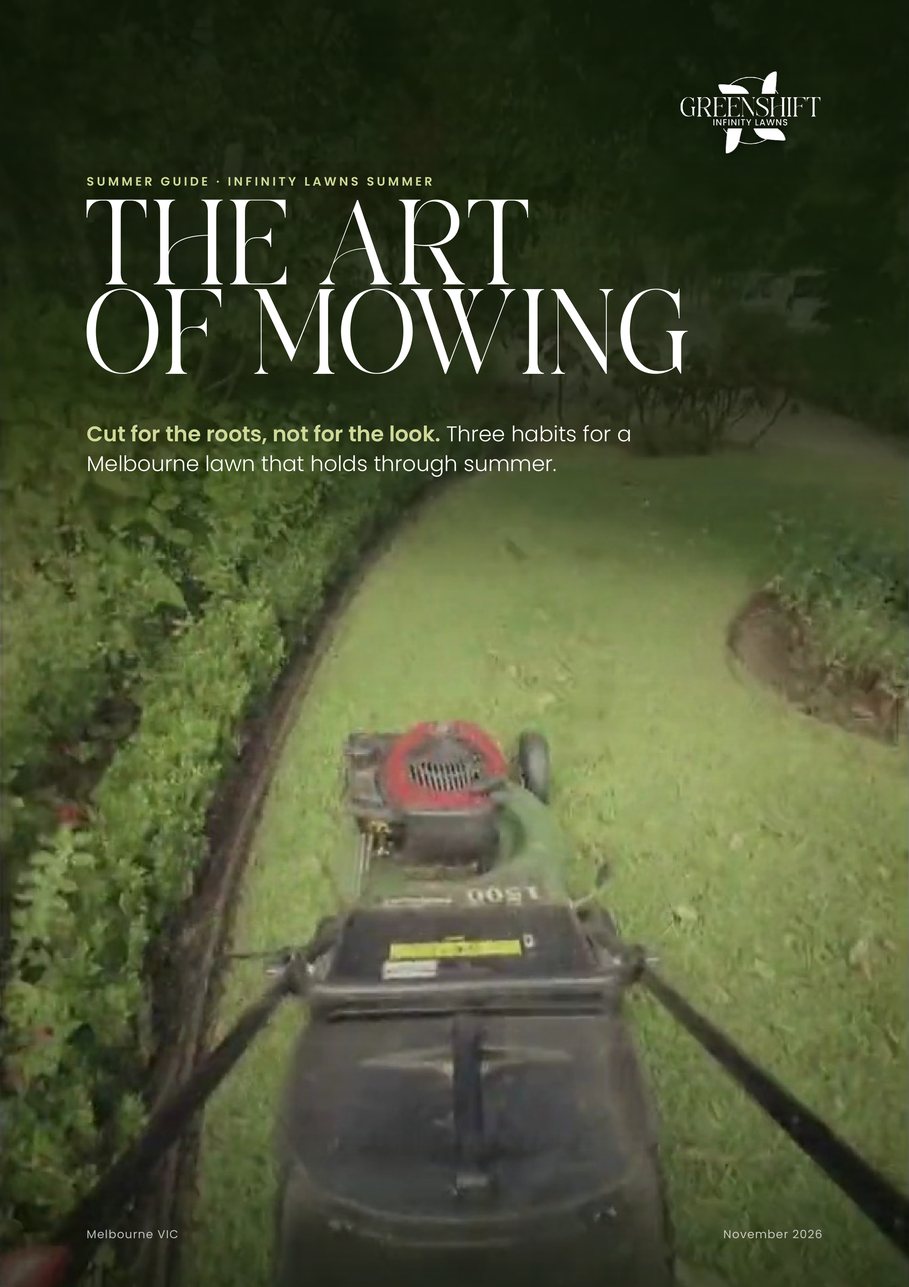
Look closely at the leaf tips. A clean cut and a torn, frayed end are different clues. Blunt blades can tear leaves rather than slicing them cleanly. Queensland Government’s lawn-care advice recommends checking blade wear for that reason.
Check the actual cut height as well. The setting on the mower does not guarantee an even result across uneven ground. A raised spot or a change in the mower’s angle can bring the blade closer to the turf than intended.
Leave equipment inspection and adjustment to someone who can do it safely, following the manufacturer’s instructions. The point is to establish whether the machine and cut are contributing before looking elsewhere. A soil treatment cannot repair a blunt blade.
What does the pattern of damage tell you?
A repeatable high spot: if the same raised section loses its green leaf after each cut, investigate cut height and surface levels. Calling that patch “hungry” skips an obvious mechanical question.
A strip beneath trees or beside a building: compare its light with the stronger lawn nearby. Grass in shade can need a different mowing approach, and there are sites where light is too limited for satisfactory turf. The University of California’s guidance for shaded lawns explains why that difference matters.
A familiar walking route: regular traffic and soil condition belong in the investigation. A mower may cross the area, but it is not necessarily the only source of wear. Persistent weakness needs the history of how the space is used.
A change during dry weather: consider moisture stress before another cut. Heat and dry conditions can change what the lawn can tolerate. Postponing mowing may be appropriate while that stress is assessed.
None of those patterns is a diagnosis on its own. Each helps decide what to examine next. Several causes can overlap, so finding one does not automatically rule out the others.
What should you record before asking for advice?
Take a wide photograph showing where the damage sits and a close-up showing the leaf. Record when it became visible, whether it happened before and what changed around that time.
Share the mowing interval, the intended height and any recent feeding or watering changes. If a mower contractor looks after the lawn, ask what they noticed during the cut. Their observations can help distinguish a surface issue from a patch that was already struggling.
Then make the change that the evidence supports and watch the response. Avoid changing the mower, adding fertiliser and altering irrigation all at once without a clear reason. It becomes difficult to learn which decision mattered.
Put the explanation before the fix
A machine fault needs a machine correction. An unsuitable cut needs a mowing adjustment. A soil, water or light problem needs its own assessment. Keeping those questions connected gives the lawn a better chance than repeating whichever fix is easiest to buy.
For the timing side of the question, read Your lawn might need less mowing. If a robot does the cutting, blunt blades are just as likely; see what robot mower care involves. If the next instinct is another feed, read More fertiliser isn’t always the answer.
Local lawn care and the next step
For local service information, see lawn care in Glen Eira. The cause of a weak patch still needs to be checked on the individual site.
See Program plans and prices, or learn how the Program works before deciding whether it fits your lawn.
Common questions
Do brown patches after mowing prove the blade is blunt?
No. Check the cut leaf, the height and the pattern. Uneven ground, existing weakness and growing conditions can also matter.
Should I replace the mower?
Establish the cause first. Maintenance or a change in mowing practice may be sufficient; replacing equipment will not correct every site problem.
Should I feed the pale area immediately?
Poor colour alone does not establish a nutrient shortage. Record the symptoms and investigate before adding another treatment.
Want to understand what your lawn needs? Learn how the Infinity Lawns Program starts with a Lawn Performance Assessment.
How the Program worksCustodianship in practice: we facilitate rather than impose, listening as much as we tend, and working with the rhythms of the living soil rather than against them.
Greenshift Infinity Lawns acknowledges the Wurundjeri Woi-wurrung and Bunurong / Boon Wurrung peoples of the Kulin Nation, the Traditional Owners and Custodians of the lands and waters of Melbourne's inner south-east on which we work. We pay our respects to Elders past and present, and recognise their continuing connection to this land, its waters, and its skies.