Can a tidy lawn still be unhealthy?
A tidy cut shows presentation, but cannot establish root condition, soil structure or drainage. Recurring thinning, pooling and poor recovery deserve investigation even when the edges are straight. Read those patterns alongside light, water and use before deciding what to change.
The finish can hide the question
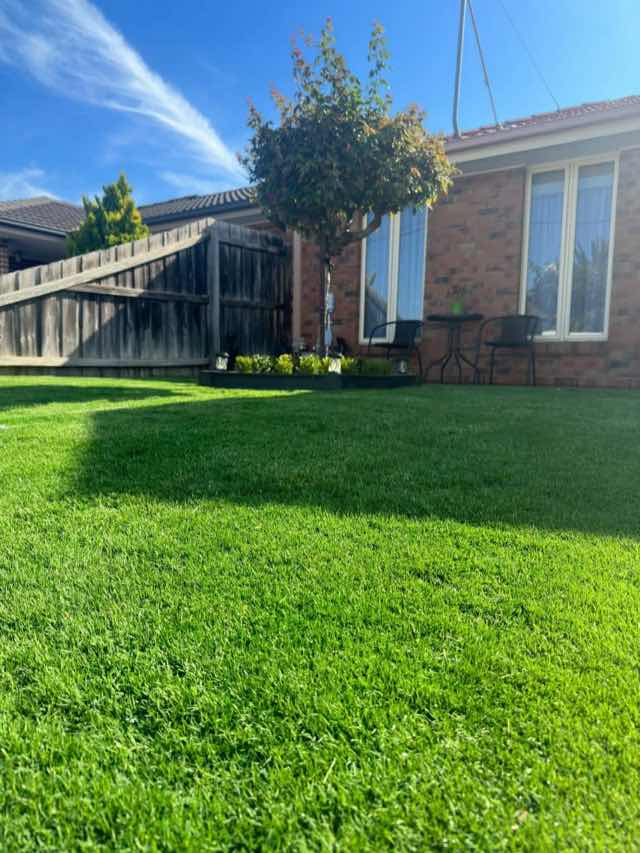
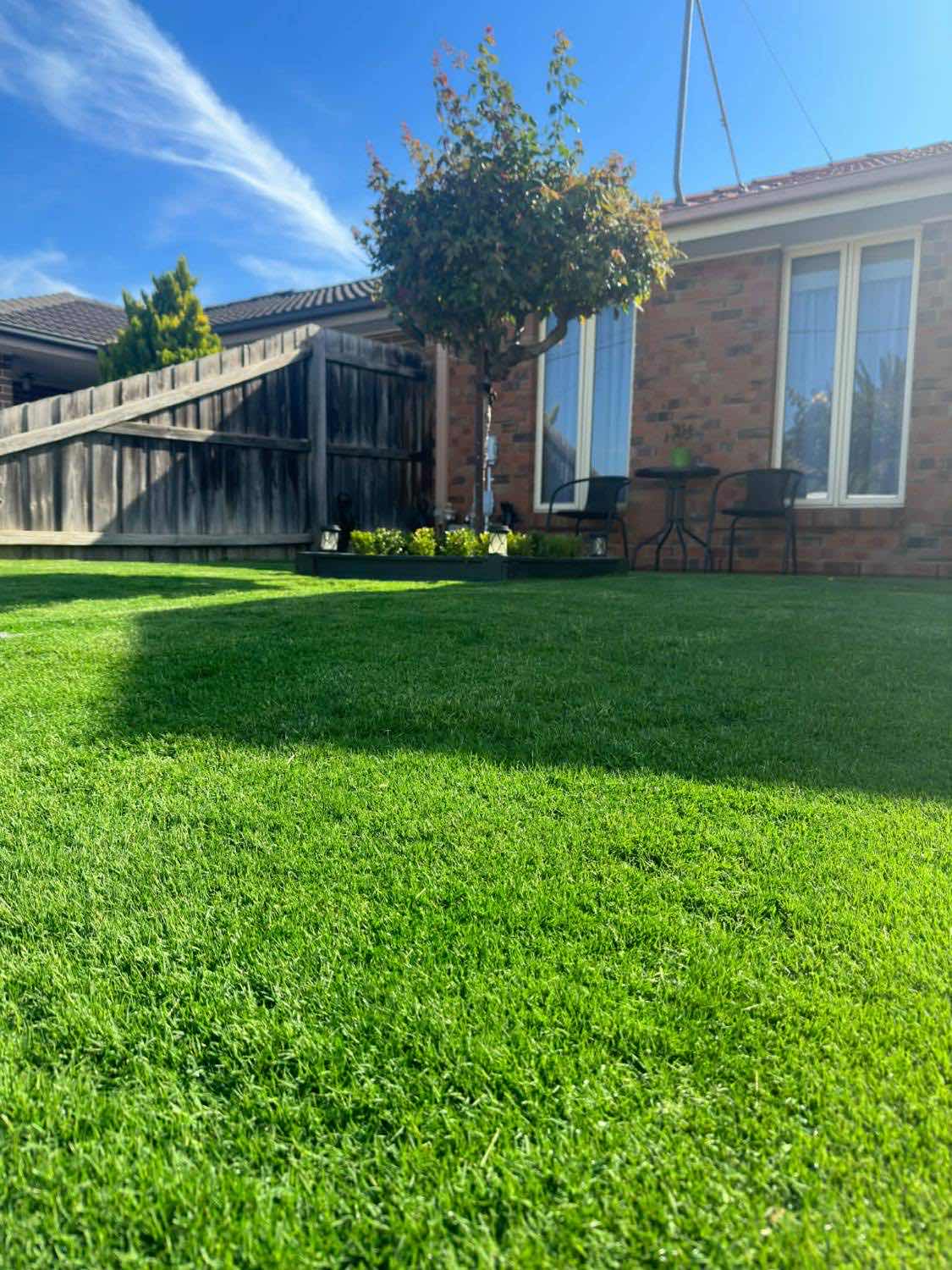
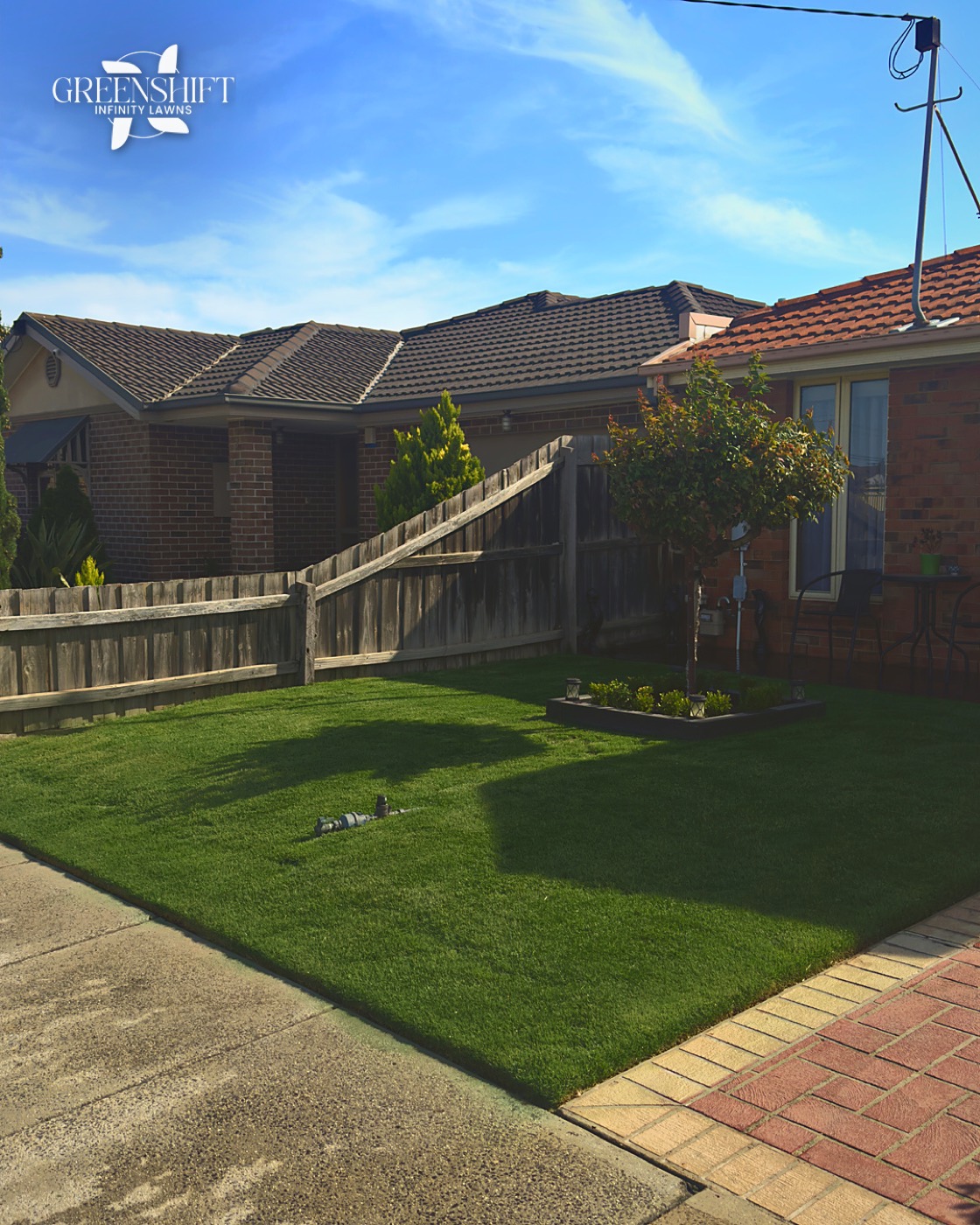
The edges are straight. The mower lines are even. From the front gate, the lawn looks cared for. Yet the same patch beside the path keeps thinning, water sits in one corner after rain, and the grass struggles whenever the weather turns hot.
Those things can exist together. Tidiness tells you the surface has been maintained. It cannot, on its own, tell you how well water moves through the ground, how much light the grass receives or what is happening around the roots.
For a Melbourne homeowner, that distinction changes the next decision. A lawn that looks tired may need a different mowing approach. It may also have a problem that mowing cannot reach. Spending more effort on the finish will not tell you which it is.

What does a fresh cut tell you about lawn health?
Mowing is useful care. A suitable height and a clean cut help maintain a lawn that people can walk on, play on and enjoy. The point is to choose that finish around the grass and its growing conditions.
Cutting below a suitable height removes leaf the plant needs. Keeping every part of a mixed-light garden equally short can also overlook the different conditions beside a fence or beneath a tree. A neat result immediately after mowing is therefore only one observation, not a complete health assessment.
The Botanic Gardens of Sydney’s turf-care guide treats soil, species, water, nutrition and mowing as connected parts of lawn care. It is a useful reminder to look beyond the cut itself.
Which lawn problems deserve a closer look?
Start with the parts of the lawn that repeatedly behave differently. A thin strip on a regular walking route raises a question about wear and soil condition. A weak area under a tree raises questions about light and root competition. Persistent pooling raises questions about how water enters and leaves the ground. Agriculture Victoria’s guide to how soil works explains why: heavy traffic can compact soil and reduce the air and water moving through it, and heavy clays drain slowly.
These are clues, not diagnoses. Water sitting on the surface does not prove every lawn needs aeration. Thin grass does not prove a nutrient shortage. Several problems can produce a similar appearance, so the pattern needs to be read alongside the site.
Photographs from the same position help you notice whether the affected area is spreading, holding steady or recovering. Keep a short note of rain, watering, mowing and heavy use. That context makes the next conversation more useful than a single close-up of brown grass.
What should you check before changing lawn care?
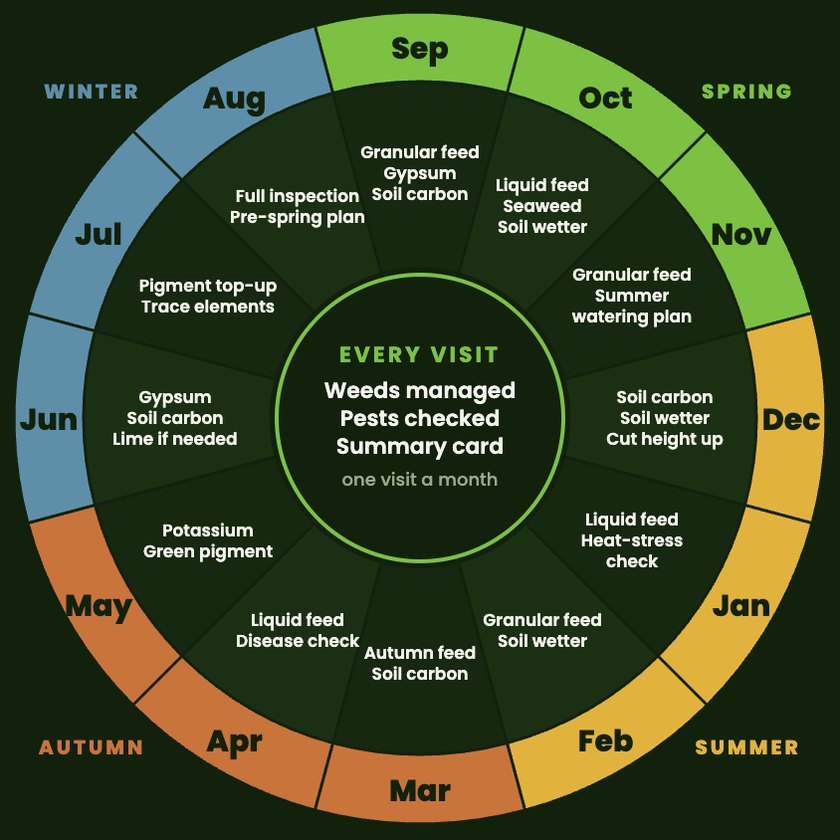
- Where: is the problem across the whole lawn or limited to one place?
- When: does it follow mowing, rain, heat or repeated foot traffic?
- Light: does that area receive noticeably less sun than the stronger grass?
- Water: does it remain wet, dry out quickly or miss the sprinkler’s coverage?
- Recovery: does the same patch improve between stresses, or return each time?
Bring those observations to an assessment rather than choosing a treatment from appearance alone. Roots and soil can then be examined in context. Our existing note, The clay under your lawn, explains why the ground deserves its own attention.
Keep the finish; broaden the standard
A healthy lawn can be beautifully tidy. The useful change is to judge success over time as well as on mowing day. Does the turf maintain cover? Does the recurring weak patch recover? Does the care suit the available light and the way the space is used?
That is a more meaningful standard than making every blade the same height regardless of what the lawn is telling you. The finish becomes part of the care, supported by an understanding of the living ground beneath it.
Local lawn care and the next step
For advice relevant to local growing conditions, see our Stonnington lawn-care page. A shaded lawn and an open lawn in the same neighbourhood can need different care.
See Program plans and prices, or learn how the Program works before deciding whether it fits your lawn.
Common questions
Can a green lawn still have a problem?
Yes. Colour alone cannot confirm soil structure, drainage or root condition. A recurring problem deserves attention even if the rest of the lawn looks green.
Does this mean I should stop mowing?
No. Keep mowing appropriate to the grass and its growth. If timing is the issue, read Your lawn might need less mowing.
Can a photograph diagnose the soil?
A photograph helps show a pattern. It cannot replace examining the site and taking the measurements needed to answer a soil question.
Want to understand what your lawn needs? Learn how the Infinity Lawns Program starts with a Lawn Performance Assessment.
How the Program worksCustodianship in practice: we facilitate rather than impose, listening as much as we tend, and working with the rhythms of the living soil rather than against them.
Greenshift Infinity Lawns acknowledges the Wurundjeri Woi-wurrung and Bunurong / Boon Wurrung peoples of the Kulin Nation, the Traditional Owners and Custodians of the lands and waters of Melbourne's inner south-east on which we work. We pay our respects to Elders past and present, and recognise their continuing connection to this land, its waters, and its skies.